- Shop All Documents + Bundles
- FORS V7.1 Document Bundle | Bronze (15 Policies)
- Transport Manager Compliance Pack (10 Policies)
- Transport Manager Compliance Pack (6 Policies)
- Health & Safety Policy Template
- Fuel, Emissions And Air Policy Template
- Operational Security Policy Template
- Serviceability And Roadworthiness Policy Template
- Road Traffic Collision Policy Template
- Counter Terrorism Policy Template
- Load Safety Policy Template
- Vehicle Routing And Scheduling Policy Template
- Driving Standards Policy Template
- Driving Hours Policy Template
- In Cab Technology Policy Template
- Passenger Safety Policy Template
- Complaints And Grievances Policy Template
- Drug And Alcohol Management Policy Template
- Hazard And Risk Identification Policy Template
- VOR (Vehicle Off Road) Policy Template
- Tyre + Wheel Policy Template
- Health & Eyesight Policy Template
- Transport Infringement Policy Template
- Walk Around Check (Defect Check) Tool Box Talk Template
- Transport Manager CV Template
- Social Media Policy Template
- Transport Manager Contract Template
- External Transport Manager Contract Template
- Driver Handbook
Alternate Fuels, Coach, Compliance, eCommerce, Europe, Haulage, International, News, Technology, Trailers, Transport, Transport Manager Resources
Powering the Future of Freight: £1 Billion Push Signals Turning Point for Electric HGVs

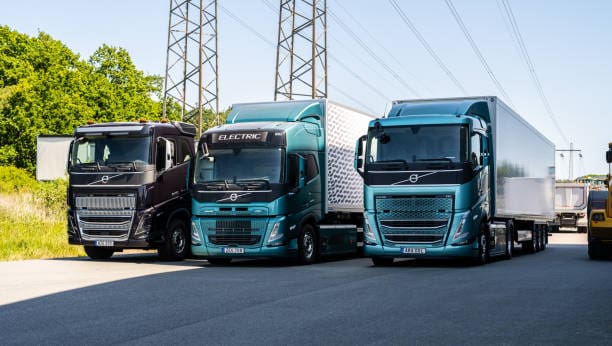
The government’s announcement of a £1 billion investment into electric heavy goods vehicles (HGVs) and supporting infrastructure marks a defining moment for the UK’s freight sector. At a time when operators are balancing rising costs with mounting pressure to decarbonise, the move signals both clear intent and growing urgency from policymakers.
For years, the transition to zero-emission freight has lagged other parts of the transport industry. The reasons are well understood. HGVs demand high power, long range, and absolute reliability—requirements that have historically been difficult and expensive to meet with electric technology. As a result, many operators have taken a cautious, wait-and-see approach.
This latest funding package is designed to shift that mindset.
A significant portion of the investment will go towards building high-capacity charging infrastructure across key freight routes. For operators, this could be the missing piece of the puzzle. The lack of reliable, strategically placed charging has been one of the biggest barriers to adoption, particularly for long-haul operations. Expanding access along motorways, near logistics hubs, and at ports has the potential to make electric HGVs a practical option rather than a theoretical one.
But infrastructure is only part of the equation. Just as critical is the effort to reduce the upfront cost of vehicles.
Electric HGVs still carry a substantial price premium over diesel equivalents, often putting them out of reach for all but the largest or most sustainability-driven fleets. To address this, the government is scaling up financial incentives through schemes such as the Plug-in Truck Grant. In practical terms, this means operators can now access significant discounts, typically tens of thousands of pounds per vehicle. For larger trucks, support can reach around £80,000, and in some cases even higher, depending on weight and configuration.
That level of support begins to materially close the cost gap, changing the conversation for fleet managers. What was once a long-term ambition is starting to look like a near-term business decision.
Beyond the immediate impact on operators, the investment carries wider economic implications. Scaling up electric freight will drive demand across multiple sectors, from battery manufacturing to charging technology and energy management systems. It presents an opportunity for the UK to strengthen its position in the rapidly evolving green transport market while supporting job creation and innovation at home.
That said, delivery will be everything. The industry has heard ambitious announcements before, only to see progress slowed by planning delays and fragmented rollout. For this programme to succeed, coordination between government, local authorities, network operators, and private industry will be essential. Infrastructure needs to be deployed in the right places, at the right scale, and at the right speed.
There are also operational challenges still to resolve. Questions around charging times, grid capacity, and long-term electricity pricing remain front of mind for operators. While electric vehicles promise lower running costs, predictability will be key to building confidence across the sector.
From an environmental standpoint, the potential gains are significant. HGVs account for a disproportionate share of road transport emissions, suggesting their electrification could deliver outsized benefits. However, those gains will ultimately depend on continued progress in decarbonising the electricity grid itself.
What is clear is that the direction of travel is now firmly set. The combination of substantial public investment, improving technology, and targeted financial incentives is creating a tipping point for the industry.