- Shop All Documents + Bundles
- FORS V7.1 Document Bundle | Bronze (15 Policies)
- Transport Manager Compliance Pack (10 Policies)
- Transport Manager Compliance Pack (6 Policies)
- Health & Safety Policy Template
- Fuel, Emissions And Air Policy Template
- Operational Security Policy Template
- Serviceability And Roadworthiness Policy Template
- Road Traffic Collision Policy Template
- Counter Terrorism Policy Template
- Load Safety Policy Template
- Vehicle Routing And Scheduling Policy Template
- Driving Standards Policy Template
- Driving Hours Policy Template
- In Cab Technology Policy Template
- Passenger Safety Policy Template
- Complaints And Grievances Policy Template
- Drug And Alcohol Management Policy Template
- Hazard And Risk Identification Policy Template
- VOR (Vehicle Off Road) Policy Template
- Tyre + Wheel Policy Template
- Health & Eyesight Policy Template
- Transport Infringement Policy Template
- Walk Around Check (Defect Check) Tool Box Talk Template
- Transport Manager CV Template
- Social Media Policy Template
- Transport Manager Contract Template
- External Transport Manager Contract Template
- Driver Handbook
Modul-System UK named approved Kia Conversion Partner

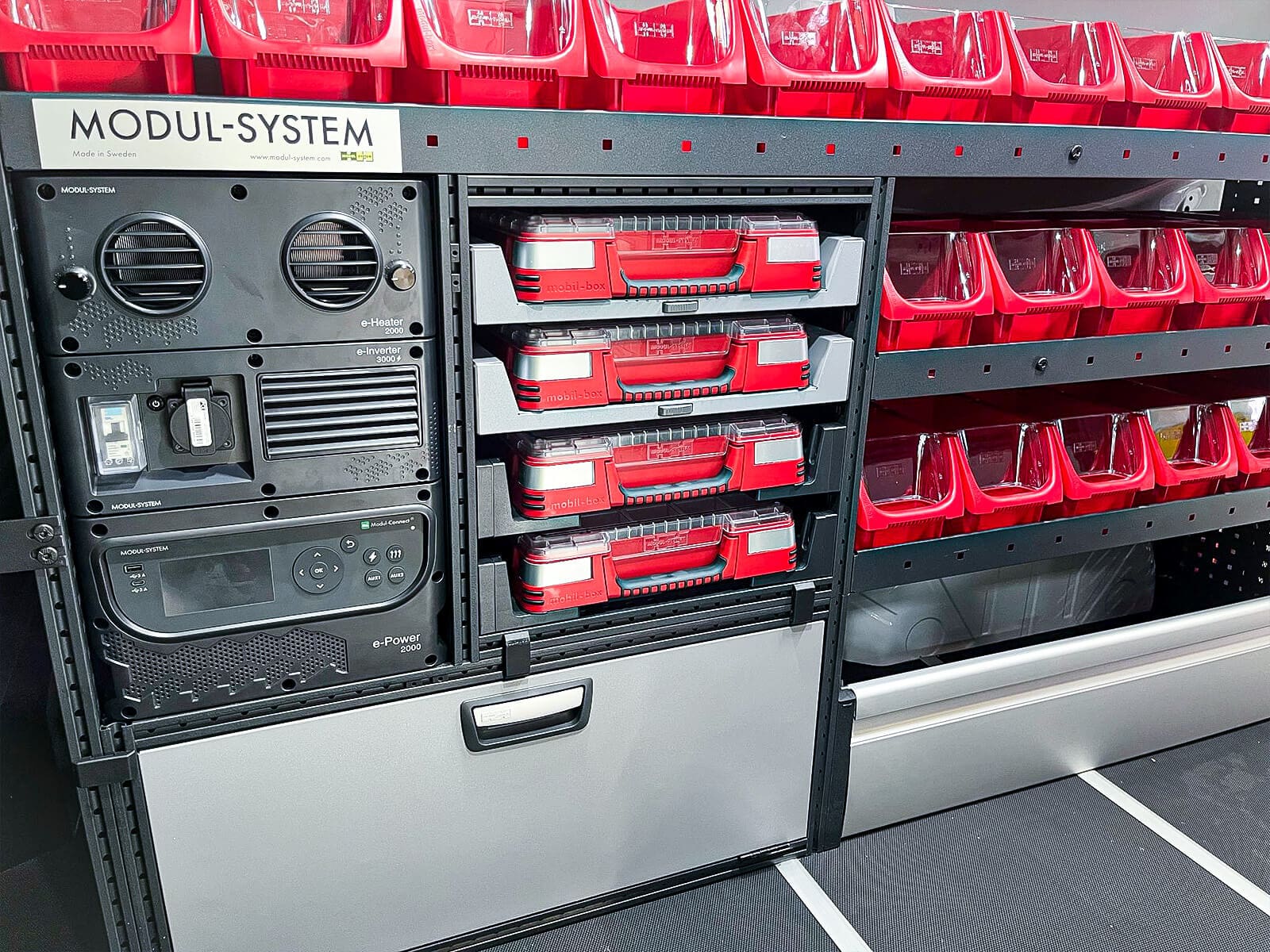
Modul-System UK named approved Kia Conversion Partner
Named among the first approved Conversion Partners for Kia’s Platform Beyond Vehicle range, Modul-System UK is offering fleet operators something larger than racking: a single integrated fit-out relationship covering racking, electrical systems, telematics and compliance across the all-electric PV5 Cargo.
The Commercial Vehicle Show 2026 closed with one shift dominating conversation across the electric LCV stands: purpose-built electric vans are arriving in numbers, and the fit-out industry is being asked to respond with something more substantial than an aftermarket bolt-on kit. Nowhere was that clearer than at the joint Kia UK and Modul-System UK presence, where the all-electric PV5 Cargo made its UK debut alongside news that Modul-System had been named among the first approved Conversion Partners for Kia’s Platform Beyond Vehicle (PBV) range.
For fleet buyers preparing an electric transition, the announcement carries weight beyond a racking accreditation. The PV5 is a different kind of vehicle, and Modul-System, with more than five decades of commercial vehicle engineering behind it, is offering a different kind of fit-out partnership to match.
One partner, one specification, one relationship
The case begins with how large fleet operators actually procure. A 200-vehicle EV rollout is not a hardware purchase; it is a multi-year programme involving specification sign-off, compliance evidence, integration with fleet management systems, and ongoing support as further tranches enter service.
The traditional model, with racking from one supplier, electrics from another, telematics from a third, and accessories from whoever happens to be available on the day, does not scale. It fragments accountability, multiplies compliance paperwork, and leaves the fleet operator as the de facto systems integrator.
Modul-System’s OEM accreditations, now including Kia, are the product of decades of building the opposite model: one partner, one specification, one invoice, and one compliance chain, documented to a standard the vehicle manufacturer has independently signed off. For a Head of Fleet writing a board paper on EV transition, that is the difference between a manageable rollout and a procurement headache.
Weight: the commercial argument that compounds on EVs
The payload equation for electric LCVs has shifted fundamentally. Battery weight is fixed. Everything else in the cargo area competes for what remains. A fleet losing 200kg of payload to a heavy interior is losing productive capacity on every journey the vehicle completes for the next seven years.
Modul-System has engineered for weight since 2004 using high-strength steel, and since 2013 its racking has been built from ultra-high-strength steel. The company’s own figures show that transition so far has reduced steel consumption by approximately 6,000 tonnes, around 450 tonnes a year, while maintaining the load ratings and durability the original construction was trusted for. For fleet managers specifying PV5 Cargo today, that heritage converts directly into measurable additional payload, or additional range per charge, on every vehicle.
Modul-Connect: telematics built in, not bolted on
Walk into most commercial vehicle cabs today and the dashboard tells the same story: tracker boxes on the A-pillar, cameras suction-mounted to the windscreen, route tablets on the air vents, and separate screens for load sensors and reverse aids. Each one cost money to install. Each one is a driver distraction at motorway speed. Each one becomes another support contract the moment something stops working.
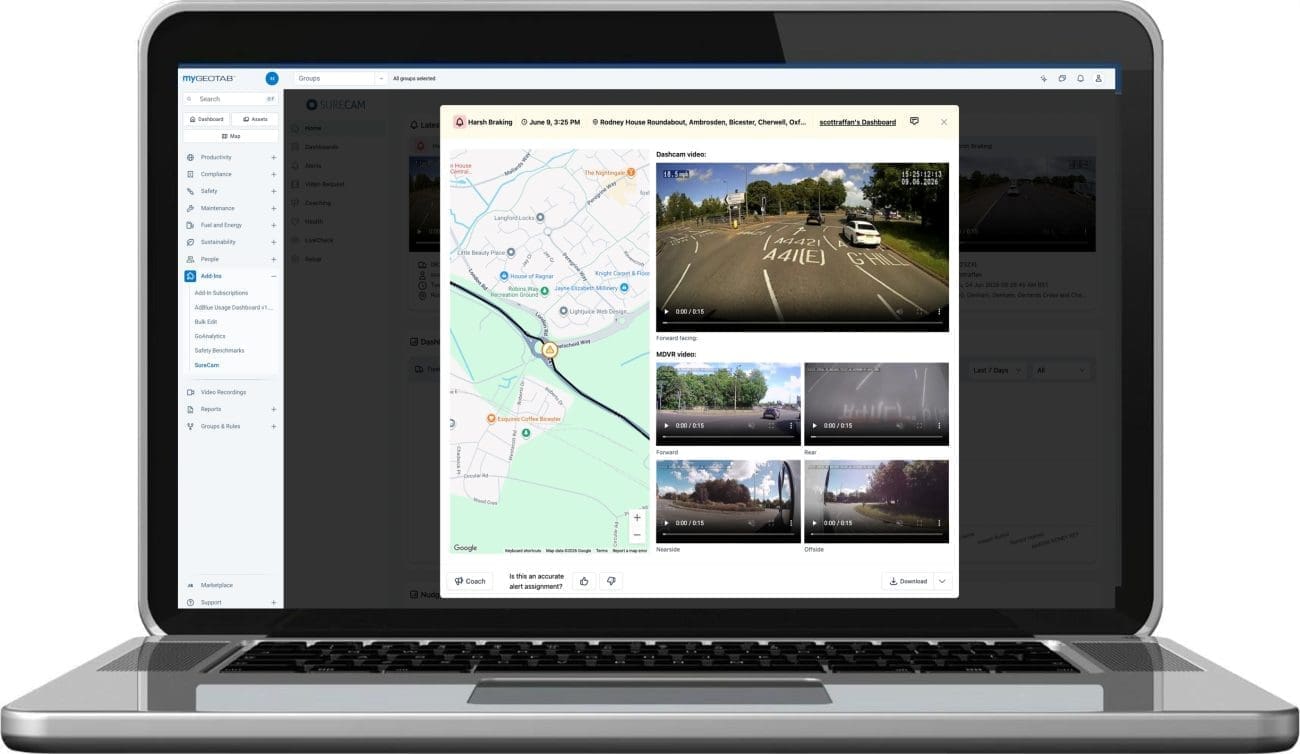
Modul-Connect, Modul-System’s connected-vehicle platform, takes a different route. On Kia PV5 Cargo installations, Modul-Connect integrates directly into the vehicle’s own infotainment system, delivering telemetry, asset tracking, tool management and driver alerts through the factory screen the operator is already looking at. No aftermarket boxes. A cleaner cab, a shorter install, and a single support relationship.
That level of integration is only possible because Modul-System operates at OEM partnership level with the vehicle manufacturer. It is precisely the capability a strategic fit-out partner should deliver, and precisely the capability a parts supplier cannot. That integrated approach was recognised at the WhatVan? Awards 2026, where Modul-System won the Technology Award and was Highly Commended for Green Innovation, at the same ceremony that named the Kia PV5 Van of the Year.
Compliance, and a sustainability curve
Every Modul-System configuration is crash-tested to recognised European standards, certified to ISO 9001 and ISO 14001, and compliant with REACH and RoHS. For fleets under DVSA scrutiny or corporate duty-of-care frameworks, that evidence trail is the practical distinction between an approved Conversion Partner and an aftermarket alternative.
The strategic case extends beyond delivery. Modul-System’s weight-reduction programme and fossil-free steel R&D with its mill partners mean fleets specifying today are buying into an improvement curve. From 2026, the company will publish CO₂ data per product on quotations and order confirmations, a level of lifecycle transparency most fleet buyers are only beginning to demand, and few suppliers can yet deliver. For operators reporting against Scope 3 targets, that is a competitive advantage at board level.
One platform, every operator profile
The same modular architecture that enables integrated fit-out also solves the fleet-variety problem. Electricians, plumbers, utilities fleets, last-mile delivery operators and mobile service engineers are all supported by the same underlying Modul-System platform, with each vehicle CAD-specified to its role. On a platform like the PV5, a single OEM approval now covers the full range of applications the vehicle is being positioned for.
Partnership voices
Kevin Walker, Managing Director at Modul-System UK, frames the appointment as an endorsement of positioning rather than product. “Being named among the first approved Conversion Partners for Kia’s PBV range is an endorsement of the model we’ve built the business around: not selling racking, but delivering a full strategic fit-out that fleet managers can specify once and trust across an entire EV rollout. Operators no longer want four suppliers and four compliance folders; they want a single partner still accountable to them when the second tranche of vehicles arrives three years down the line.”
He singles out Modul-Connect as the clearest proof point. “Pulling telematics into the PV5’s own infotainment screen instead of bolting another box to the A-pillar makes a large difference to driver focus, install time and the cab environment the operator’s people spend their working day in. That level of integration is what separates a strategic partner from a parts supplier.”
For Kia, the appointment sits within a wider PBV rollout strategy. Dave Catt, PBV Product and Pricing Manager, commented: “Welcoming Modul-System UK as one of the first approved Conversion Partners for Kia’s PBV range is a significant step in how we are bringing the PV5 Cargo to UK fleets. Operators want a vehicle and an interior specified as one coherent solution. Modul-System’s OEM-level engineering track record, weight-optimised ultra-high-strength steel systems and the Modul-Connect integration into the PV5’s own infotainment system give us precisely that end-to-end proposition.”
Next stop: RTX Stoneleigh, 30 June to 2 July
The partnership was unveiled at the CV Show in Birmingham, with visitor response confirming that fleet buyers are actively looking for an electric LCV with a credible, integrated fit-out partner already named on the build sheet.
The next and largest showcase is the Road Transport Expo (RTX) at Stoneleigh Park from 30 June to 2 July, widely regarded as the standout commercial vehicle event in the UK calendar. Modul-System UK will be exhibiting on Stand GR30, presenting fully specified fit-out configurations across plumbing, electrical, delivery and service-fleet applications, alongside live demonstrations of the Modul-Connect integration.
For fleet operators with electric transition on the 2026 to 2027 roadmap, Stand GR30 is worth more than a flying visit. It may be the first place in the UK where the full integrated argument, vehicle, interior, electrics, telematics and compliance, can be assessed as a single proposition rather than assembled in the imagination from four separate conversations on the same day.